Rapid O₂ Ecuador: Science and Technology to Support Your Cotopaxi and Chimborazo Climb
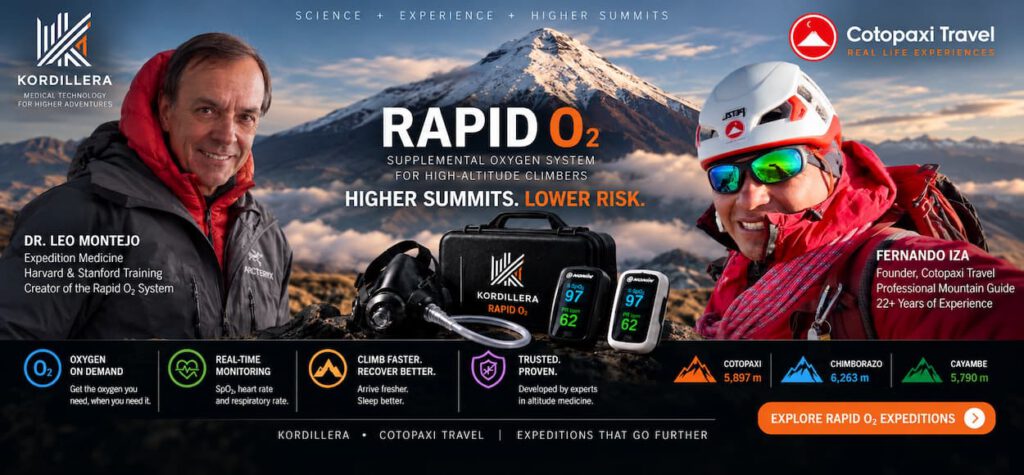
Demand-pulse oxygen, physiological monitoring and professional mountain guides brought together by Cotopaxi Travel.
What if progress in mountain oxygen systems meant making better use of every liter?
That question is at the heart of Rapid O₂ Ecuador, a project combining demand-pulse supplemental oxygen with physiological monitoring during high-altitude climbs.
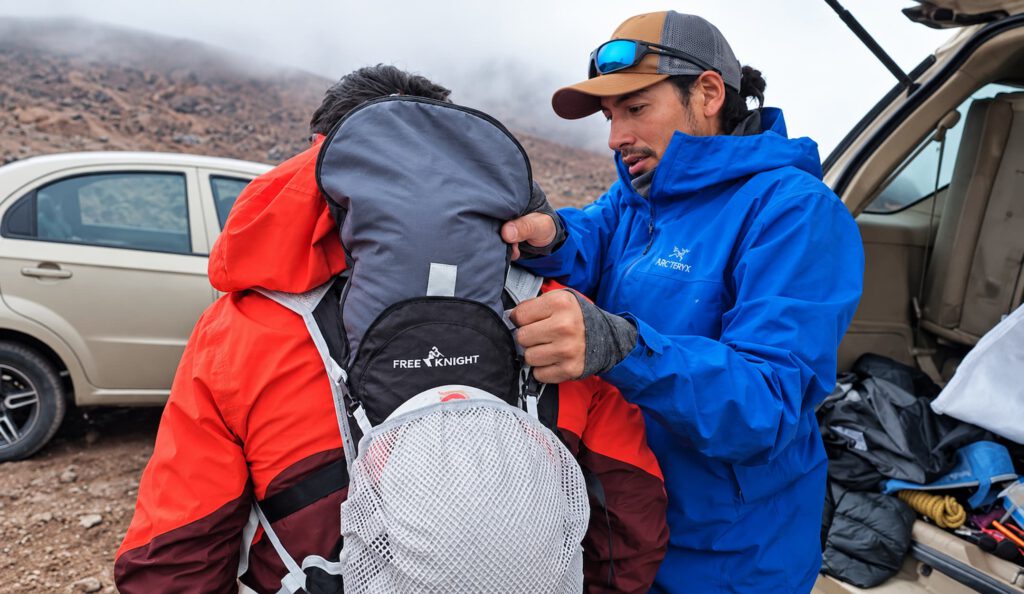
At Cotopaxi Travel, we contribute mountain experience, logistics and field operations to the project. Our work connects the technology with the practical demands of climbing Ecuador’s volcanoes: physical effort, changing weather, glacier conditions and decisions made by professional guides.
Cotopaxi and Chimborazo provide the setting for this collaboration between mountain operations, medical knowledge and oxygen-delivery technology.
What Is Rapid O₂?
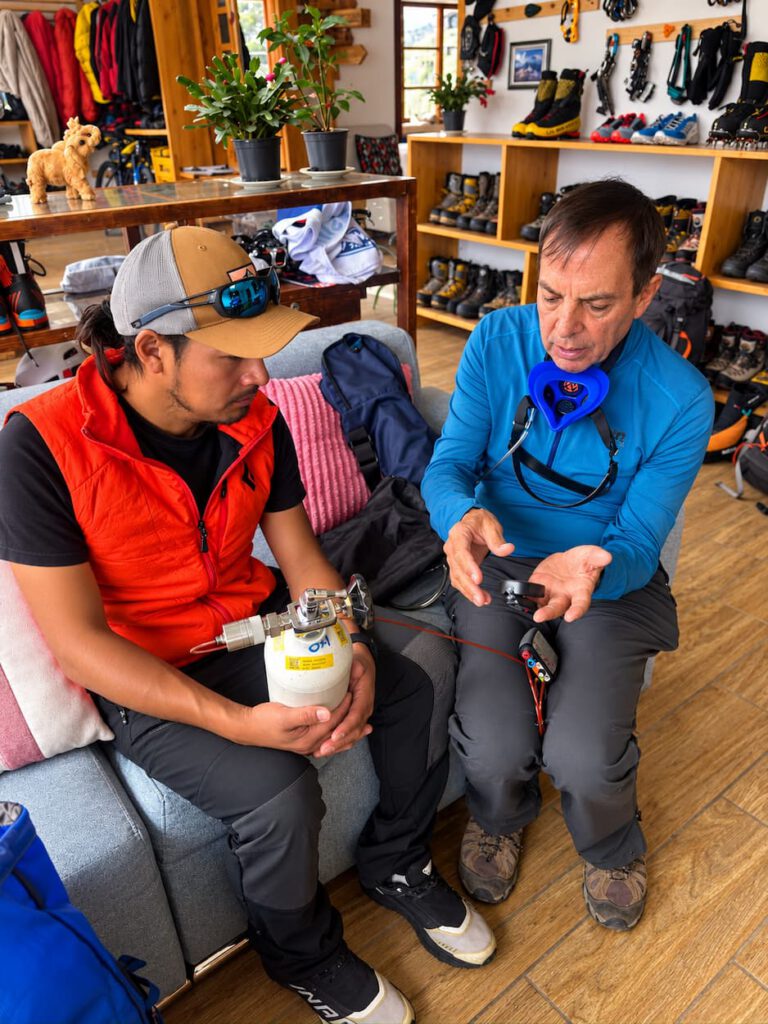
Rapid O₂ is an electronic supplemental oxygen system that detects the beginning of an inhalation and delivers an oxygen pulse through a nasal cannula.
Unlike a continuous-flow system, it concentrates delivery during a specific phase of breathing rather than maintaining a flow throughout the respiratory cycle.
The aim is to use the available oxygen more efficiently.
Demand-based oxygen delivery has an established background in high-altitude aviation. Applying it to mountaineering requires evaluating the system under different conditions: walking, increased breathing rates, changing workloads, cold, wind and moisture.
Field activities in Ecuador provide information about its operation in that environment.
The Components of the Rapid O₂ System
Oxygen delivery and physiological monitoring play complementary roles in the project.
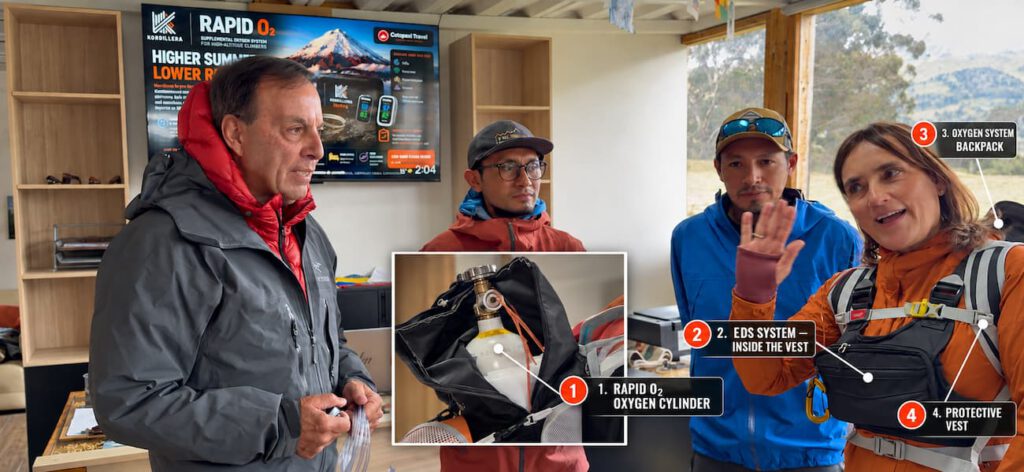
| Component | Purpose |
| Compressed oxygen cylinder | Stores the oxygen available for the activity. |
| Pressure regulator | Reduces cylinder pressure to supply the system. |
| Electronic controller | Detects inhalation and delivers oxygen pulses. |
| Barometric compensation | Adjusts pulse volume according to ambient pressure within the selected operating mode. |
| Nasal cannula | Delivers oxygen to the climber. |
| Batteries | Power the electronic controller. |
| Monitoring instruments and application | Record and organize physiological and environmental information. |
| Backup oxygen cylinder | Provides redundancy under the documented operating protocol. |
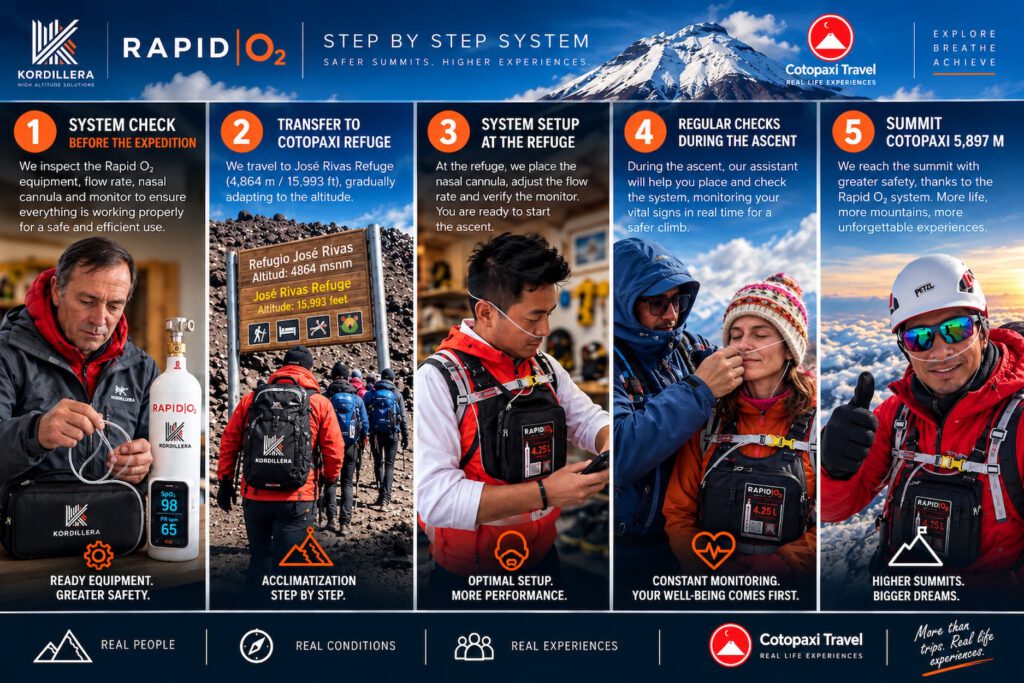
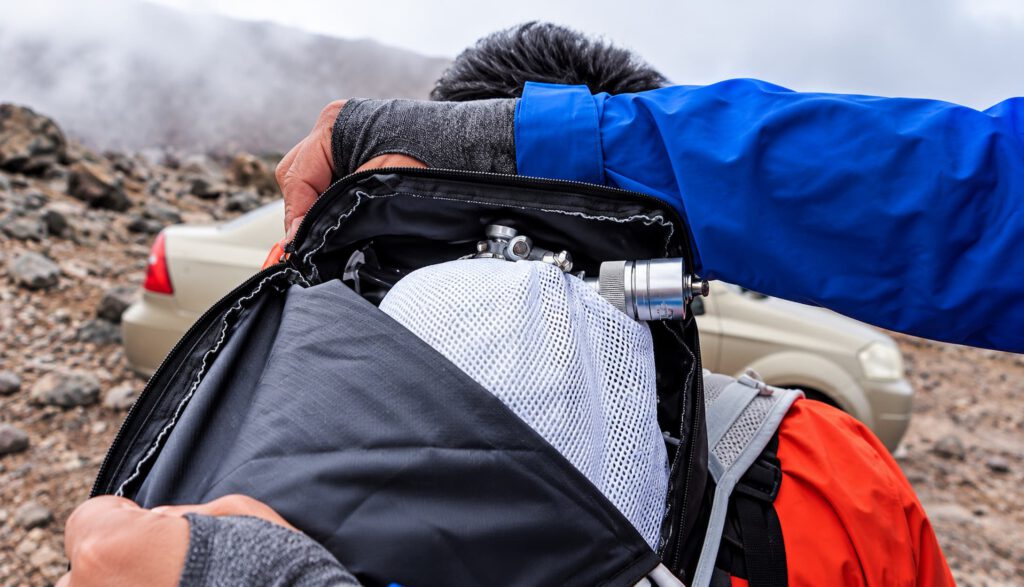
According to the project’s field documentation, the oxygen-delivery assembly used in Ecuador weighs approximately 2.9 kg, including a cylinder containing approximately 425 liters of oxygen.
How Oxygen Delivery Changes with Altitude
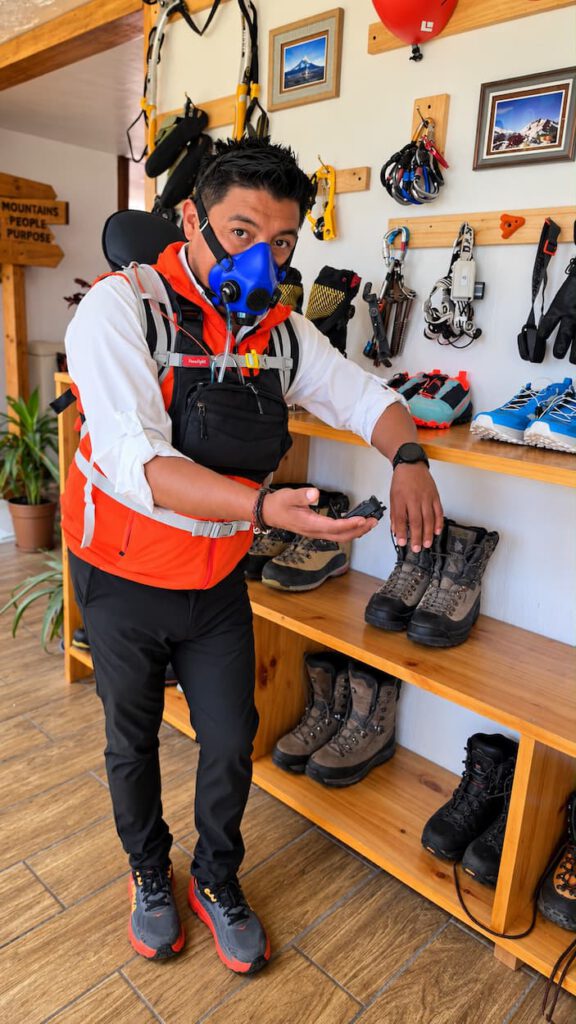
As a climber gains altitude, atmospheric pressure decreases.
Rapid O₂ incorporates barometric compensation that increases the oxygen pulse volume within the selected mode as ambient pressure falls.
This allows the controller to respond to changes in pressure without requiring manual adjustment at every new elevation.
The guide and technical specialist continue to supervise the equipment, oxygen consumption and the participant’s condition. Physical effort, breathing rate, fatigue and symptoms may change throughout the climb.
Automatic pressure compensation is one function of the system. It does not replace a complete assessment of the climber
Physiological Monitoring During the Climb
According to the project documentation, the Rapid O₂ application records information including:
Peripheral oxygen saturation —SpO₂.
Heart rate and respiratory rate.
Altitude, time and temperature.
System settings and field observations.
The value lies in understanding how these measurements develop together.
An oxygen saturation reading becomes more informative when the team knows the climber’s workload, pace, symptoms and altitude at that moment.
Cold and movement can affect measurement quality, so readings must be interpreted alongside direct observation.
The application also incorporates artificial intelligence tools intended to organize and interpret information in support of the team. Decisions about continuing, resting or descending remain with the professionals responsible for the expedition.
Rapid O₂ on Cotopaxi and Chimborazo
Cotopaxi and Chimborazo offer different environments for operating and evaluating the system.
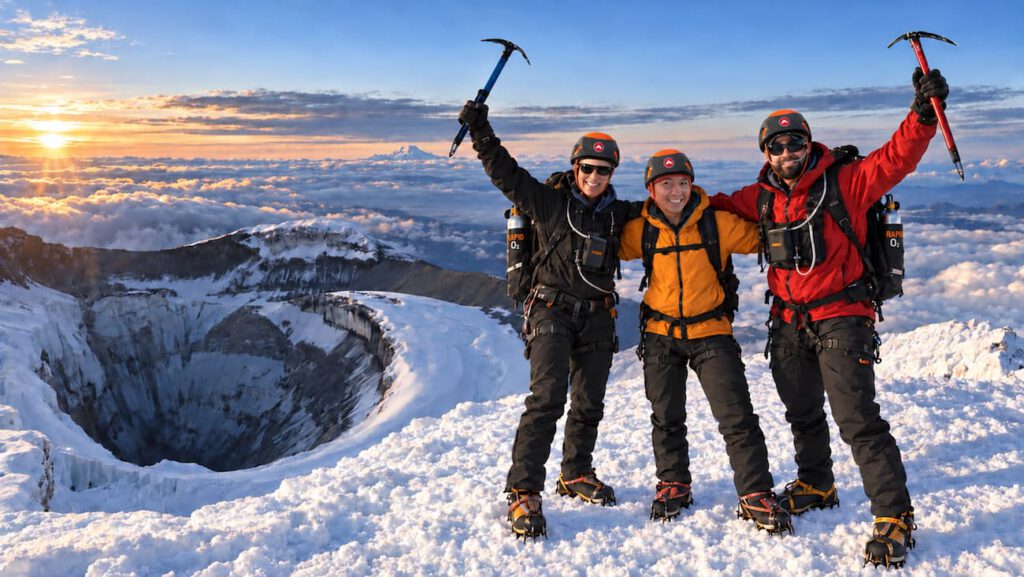
On Cotopaxi, the expedition involves preparation, glacier travel and a summit attempt toward approximately 5,897 meters.
Chimborazo presents a different combination of terrain, duration and physical effort. In one documented field activity, a climber without prior acclimatization reached approximately 5,500 meters while using Rapid O₂.
During the upper section, recorded SpO₂ values were approximately 88–90%. The team reported that the participant did not experience headaches or nausea during that activity.
The outing involved approximately six hours of climbing and returning. It ended before the summit because of the starting time.
These observations describe an individual field experience. They are not a clinical trial and do not establish equivalent outcomes for other participants or at higher elevations.
For Cotopaxi Travel, their value is practical: reviewing consumption, examining the participant’s response and improving operating procedures.
Oxygen Duration and Expedition Planning
Based on consumption observed during the Chimborazo activity, the team uses an operational estimate of approximately 12–13 hours per 425-liter cylinder under comparable conditions.
Actual duration varies with breathing rate, effort, altitude and system settings.
This estimate is therefore a planning reference rather than a guaranteed operating time. Oxygen reserves must be considered as part of the expedition.
The documented protocol includes a second cylinder carried by the specialist assistant to provide redundancy.
Supplemental Oxygen and Acclimatization
Supplemental oxygen and acclimatization serve different functions.
Oxygen support can improve oxygenation while it is being delivered. Acclimatization is a process of adaptation that takes time, and gradual ascent remains an important measure for reducing the risk of altitude illness.
Current Rapid O₂ field observations do not establish a universal reduction in acclimatization time.
Preparation must consider each participant’s mountain experience, previous exposure to altitude and response during the itinerary.
A favorable oxygen saturation reading alone does not determine whether continuing the ascent is appropriate.
Cotopaxi Travel’s Role in Rapid O₂ Ecuador
Mountain technology requires an experienced team capable of preparing equipment, organizing logistics and making decisions in changing conditions.
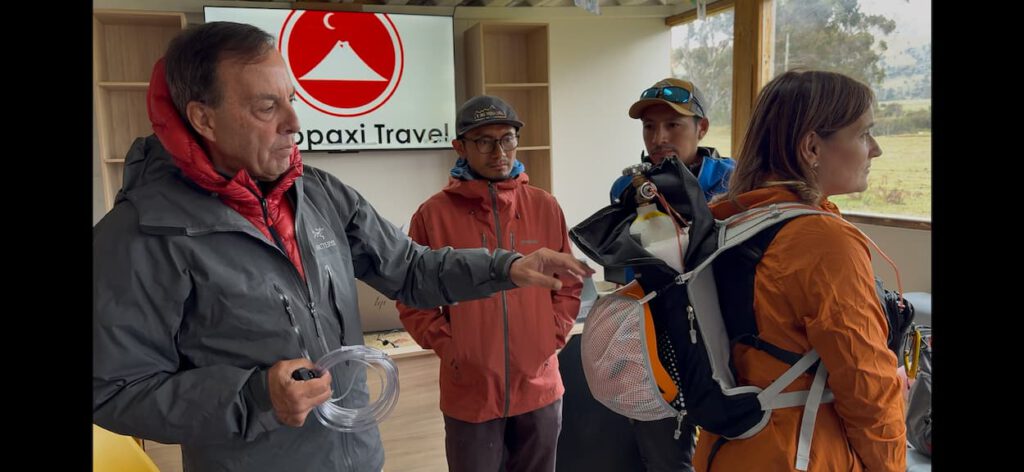
Fernando Iza, founder of Cotopaxi Travel and an ASEGUIM-certified mountain guide, participates in Rapid O₂ field operations. He contributes more than 20 years of experience on Ecuador’s volcanoes, local route knowledge and mountain safety expertise.
The project also brings together:
Dr. Leo Montejo: anesthesiologist, intensivist, glider pilot and designer of Rapid O₂.
Francisco Pulluquitín: mountain guide and engineer involved in field operations and evaluation.
Xavi Anagumbla: assistant mountain guide and Rapid O₂ technical specialist.
This collaboration connects system development with the practical needs of an expedition: preparation, supervision, logistics and evaluation of field data.